Understanding Maggot Infestation
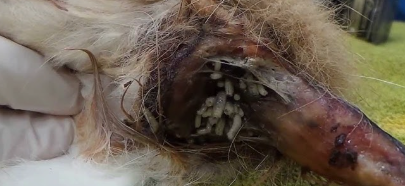
Maggot infestation (fly strike) is a common problem in dogs, especially during warm and humid weather. Bottle brush flies, which are bluish-green in color, are attracted to open wounds, moist skin folds and dirty environments.
These flies may lay eggs around wounds. The eggs appear as a whitish powder-like material. Under favorable conditions they hatch into maggots and begin feeding on damaged tissue.
Immediate Action
- Inspect wounds carefully if whitish egg-like material is noticed.
- Clean the affected area thoroughly and remove visible contamination.
- Follow veterinary advice regarding wound management and medications.
- Repeat wound inspection regularly to ensure complete healing.
- Antibiotics and additional treatment may be recommended by your veterinarian.
Preventive Measures
Prevention is always easier than treatment. Dogs with wounds, skin infections or poor grooming are more likely to attract flies.
- Keep wounds clean and protected.
- Use fly repellents when appropriate.
- Maintain proper sanitation around kennels and resting areas.
- Remove waste and food leftovers promptly.
- Monitor wounds daily until complete healing.
Commonly Used Fly Control Sprays
You may discuss products such as D'Mag Spray or Lorexane Spray with your veterinarian for wound protection and fly management.
Nutrition for Recovery
Proper nutrition plays an important role during wound healing. Dogs recovering from wounds often benefit from adequate protein, hydration and balanced nutrition.
- Eggs may be used as a protein source.
- Meat-based diets can support tissue repair.
- Paneer may be considered in vegetarian feeding plans.
- Multivitamins may be recommended where appropriate.
- Ensure constant access to clean drinking water.